Wait-and-Load Skip Hire: How It Works, 2026 Prices — and When It Beats a Roadside Skip
There's a version of skip hire most householders discover only after the council refuses their permit: the skip that never parks. Wait-and-load brings the skip on the lorry, the driver waits while you fill it, and it leaves loaded — same hour, no permit, no week of skip outside the house. Priced right and prepared right, it's the smartest tool in the skip world; unprepared, it's a taxi with the meter running. Here's the honest guide.
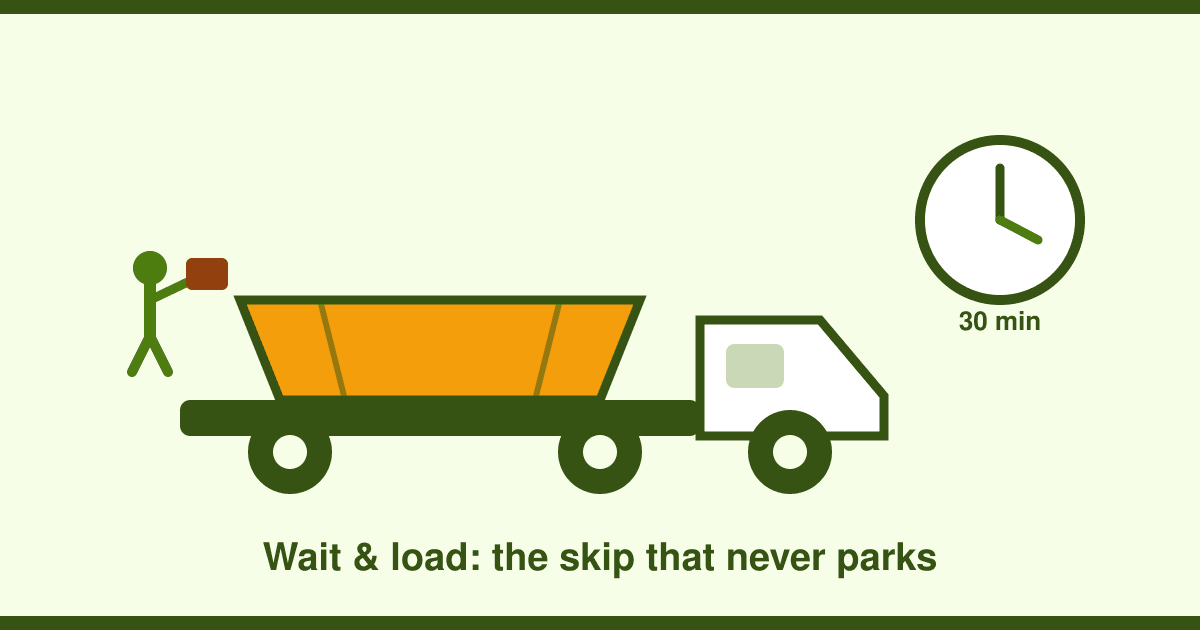
In short: The driver positions the skip, you load during the included window — typically £180–£250 for a 6-yard including 30 minutes (some firms include 15 minutes, charging ~£60/hour in 15-minute blocks after) — and the waste leaves immediately. No skip permit is needed because nothing is left on the road, which in London alone saves the £60–£120 borough permit plus parking suspensions.
How it works
- Book like a normal skip — same sizes, same waste rules — but as wait-and-load, ideally with a morning slot.
- Pile the waste first. This is the entire game: everything bagged, broken down and stacked at the loading point before the lorry arrives.
- The driver positions the skip — on the lorry or briefly kerbside — and the clock starts.
- Load fast (helpers transform the economics), driver nets the load and leaves — waste gone the same hour it left the house.
The maths against a roadside skip
| Standard roadside skip | Wait-and-load | |
|---|---|---|
| 6-yard price | standard hire rates | £180 – £250 incl. ~30 min loading |
| Council permit | £60 – £120 in London boroughs (+ suspensions) | not needed — nothing left on the road |
| Time on site | days to weeks | under an hour |
| Neighbour/scavenger issues | real | none — no unattended skip |
| Loading pressure | none — fill at leisure | the clock is the price |
The crossover is simple: with no private land for a skip, permit costs and waiting times push the standard route's true price well past its headline — wait-and-load deletes the permit line entirely. With a driveway and a slow multi-week clear-out, the standard skip keeps its crown. (The permit rules it sidesteps are worth knowing either way — and note the vehicle itself waiting on public land can still need arrangements on red routes and controlled streets; good firms advise at booking.)
When wait-and-load genuinely wins
- Permit-refused and permit-painful streets: red routes, controlled parking zones, narrow terraces — the classic London and city-centre use case.
- Ready-piled waste: house clearances, garden waste already bagged, renovation strip-out stacked in the garage — load-out in 20 minutes flat.
- Same-day needs: end-of-tenancy deadlines, sold-house clear-outs — booked morning, gone by afternoon.
- Security-conscious jobs: no unattended skip means no neighbours' mattresses appearing overnight and no scavenging.
When it loses: slow DIY projects generating waste over weeks (that's the standard skip's job), and unprepared sites — every 15 minutes of "just grabbing the stuff from upstairs" bills at the waiting rate. The alternative for scattered heavy waste is the grab lorry, and for smaller loads, man-and-van clearance — the wait-and-load sits exactly between them.
Booking checklist: confirm the included loading time in writing, the per-block rate after it, and what the size honestly holds — under-sizing a wait-and-load means a second visit at full price, the one mistake that erases every saving. Then recruit one helper per skip-yard of waste, roughly, and treat loading like the timed event it is.
The bottom line
£180–£250, half an hour, no permit, no lingering skip: for prepared piles on permit-hostile streets, wait-and-load is the skip industry's best-kept secret. Pile first, book morning, load like it's sport — and keep the standard skip for the slow jobs it was built for. Compare skip hire and wait-and-load prices near you here.
Frequently asked questions
The lorry arrives with the skip, the driver waits while you load — typically 30 minutes included — then nets the load and takes it away immediately. Nothing is left on the road, so no skip permit is needed, and the waste is gone the same hour.
Typically £180–£250 for a 6-yard skip including around 30 minutes’ loading (some firms include 15 minutes), with additional waiting charged at roughly £60 per hour in 15-minute blocks. Against that, a London roadside permit alone runs £60–£120 plus any parking suspensions.
No skip permit — the skip is never left unattended on the highway, which is the whole point. On red routes and tightly controlled streets the waiting vehicle itself can still need arrangements, so flag your street type at booking and let the firm advise.
When you cannot get or justify a permit, when waste is already piled and ready (clearances, bagged garden waste, strip-outs), and when you need same-day removal. For slow projects generating waste over weeks, a standard skip on private land remains the better and cheaper tool.